

Strength Without the Spotlight: The Power of Humility in Recovery
Humility is not weakness. It is not pretending to have no value, minimizing your progress, or making yourself smaller so other people feel comfortable. In recovery, humility is honest self-awareness. It means seeing your strengths, limits, choices, progress, and unfinished work without exaggeration or denial.
Addiction often pushes people toward extremes. We may believe we are better than everyone else, or we may decide we are beyond help. Recovery offers another position: equal. We are not the center of the universe, but we are not excluded from healing. We are people learning how to live differently, one decision at a time.
This understanding is consistent with the Big Book’s focus on ego, self-centeredness, and the need to move beyond self-will. The goal is not self-erasure. The goal is freedom from the constant demand to prove, control, defend, or perform. Humility creates room for truth. It allows a person to accept correction without collapsing, receive encouragement without becoming dependent on praise, and recognize progress without turning it into a personal trophy.
Humility also makes growth practical. It changes what happens when a problem appears. Pride says, “I can handle this alone.” Humility asks, “What support do I need before this becomes a crisis?”
Asking for help is one of the clearest forms of strength in recovery. It may mean picking up the phone when your thinking starts bargaining. It may mean sending a text before isolation becomes overwhelming. It may mean telling a sponsor, counselor, trusted friend, or support group that you do not know the next right move.
The timing matters. Reaching out after everything has fallen apart is still worthwhile, but asking earlier creates more options. A small concern can be addressed before it becomes a dangerous pattern. A difficult emotion can be discussed before it becomes an impulsive decision. A dishonest thought can be challenged before it becomes an action.
There is no requirement to carry recovery perfectly. Recovery is not a performance judged by how little support you need. It is strengthened by the willingness to use appropriate support. Community resources, peer support, professional care, and recovery programs can all serve different purposes. Humility helps us identify what is needed and accept that one person does not have to provide everything.
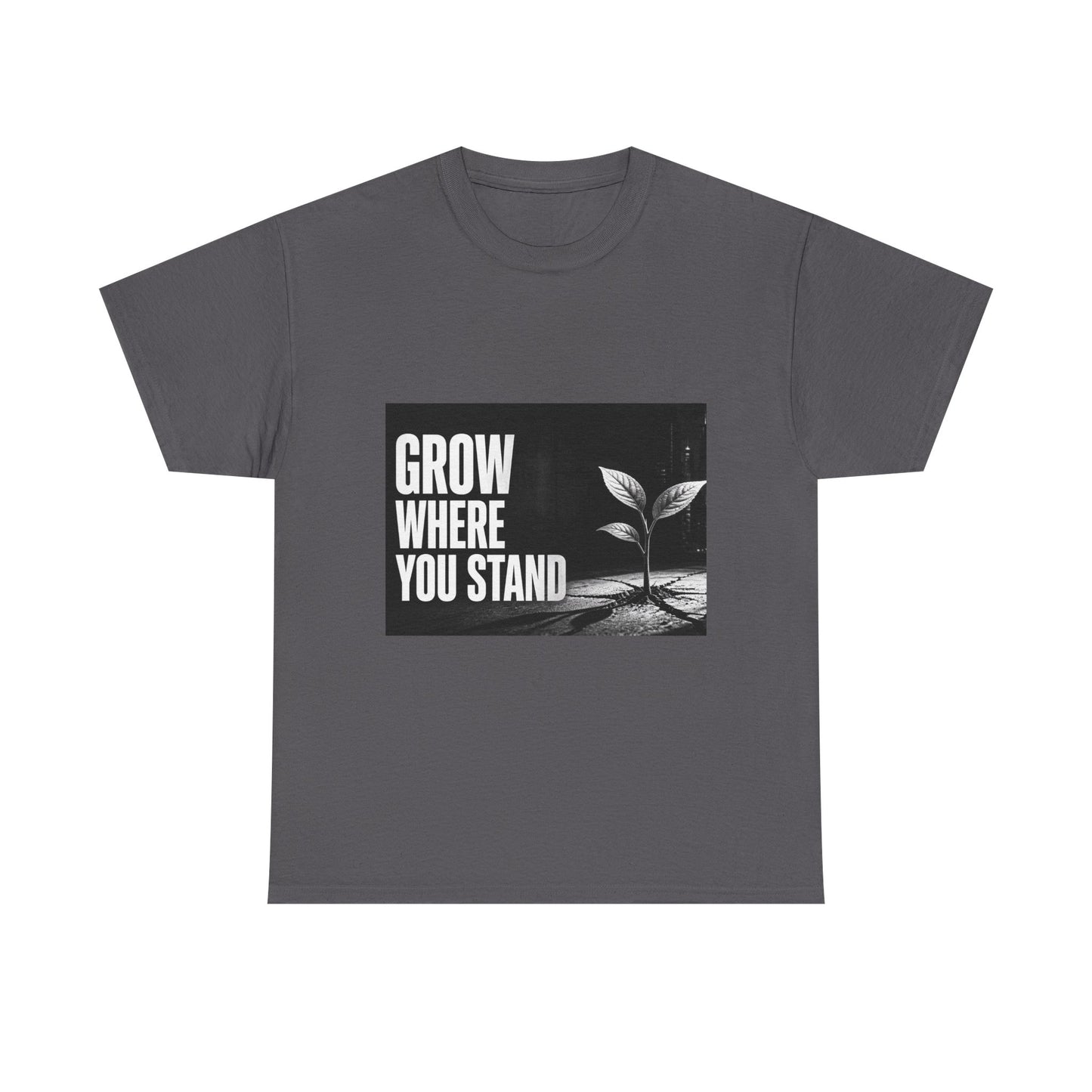
The Grow Where You Stand Cotton T-Shirt reflects this approach directly. Its seedling design and simple message point to steady growth rather than instant transformation. The shirt is made from medium-weight 100% cotton and is designed as an everyday reminder to work with the circumstances in front of you instead of waiting for perfect conditions.
Humility also changes how we listen. Defensiveness blocks information. When every suggestion feels like an attack, learning becomes difficult. We prepare a rebuttal instead of considering the message. We focus on proving that someone else is wrong instead of asking whether their perspective contains something useful.
Being teachable does not mean accepting every opinion or allowing other people to control your decisions. Healthy boundaries still matter. Discernment still matters. Humility simply keeps the door open. It lets you hear feedback without immediately treating it as a threat.
A sponsor, therapist, trusted friend, meeting leader, or someone with relevant lived experience may identify a pattern you cannot see. A difficult conversation may reveal the part of a problem you have been avoiding. Even a setback can provide information if you are willing to examine it without turning it into a verdict about your worth.
You do not need to be the smartest person in the room to make progress. You need to remain willing to learn. “I do not know” can be a useful statement. “I may be wrong” can prevent unnecessary conflict. “What am I missing?” can create a better next step.
Connection is part of that process. The Find Your People Hoodie carries a direct reminder that recovery is not designed to be managed in isolation. Its midweight cotton-poly blend, kangaroo pocket, and community-focused message make it suited for meetings, group activities, or daily wear. The principle is simple: find people who support growth, tell the truth with care, and respect the work required to maintain recovery.

Humility becomes more than an idea when it moves into service. Service clears the mirror. It interrupts the habit of staring at your own problems long enough to notice another person.
Service does not require a title, a perfect history, or years of sobriety. It can be making coffee, welcoming someone new, stacking chairs, answering a call, sharing an honest experience, or listening without trying to take control. These actions do not erase personal problems. They restore perspective.
When you are useful, you remember that your value is not limited to your mistakes or current struggles. You have something to contribute even on a difficult day. At the same time, service keeps you from turning recovery into another form of self-absorption. The focus shifts from “How am I being seen?” to “What can I do that helps?”
That shift can also strengthen connection. One person’s practical assistance may make it easier for someone else to stay, speak, ask a question, or return tomorrow. Small acts of usefulness support the larger recovery environment. They also remind the person serving that change is built through repeated behavior, not private intentions.
Humility then asks a harder question: What is my part?
This is not the same as taking responsibility for everything. Other people make choices. Harm happens. Unfair treatment exists. Boundaries may be necessary. Owning your part does not require accepting blame that does not belong to you.
It means identifying the portion you can change. Perhaps you avoided an honest conversation. Perhaps you reacted instead of responding. Perhaps you need to make an amends, correct misinformation, set a healthier boundary, or stop repeating an excuse. The question is not designed to produce shame. It is designed to locate power.
Excuses place all control outside you. Accountability gives you a next action. You cannot rewrite what happened, but you can decide what happens next. You can speak more honestly. You can ask for guidance. You can repair what is repairable. You can change the pattern that belongs to you.
The Just The Beginning Cotton T-Shirt fits this stage of recovery. Its sprout imagery and minimal black-and-white design recognize that a beginning is meaningful without pretending it is the finish line. The shirt is a classic-fit, medium-weight cotton option that carries a straightforward message: progress starts with the next honest step.
Gratitude keeps growth from turning into ego. Recovery may bring peace, stronger relationships, stability, clearer thinking, and the ability to show up consistently. Those changes should be acknowledged. Humility does not require denying good news.
It changes how good news is held.
Gratitude remembers the people, principles, practices, and support that helped make progress possible. It recognizes that recovery is a daily practice, not a trophy placed on a shelf. A good season is not evidence that you no longer need the habits that helped you reach it. It is evidence that those habits remain useful.
Accept the compliment. Notice the improvement. Celebrate the milestone. Then stay connected. Keep calling. Keep listening. Keep showing up. Gratitude allows confidence and humility to exist together.

The Progress Over Perfection Hoodie expresses that balance. Its seedling and cracked-earth design connect progress with responsibility and continued work. The midweight hoodie includes a double-lined hood, kangaroo pocket, and a message suited to recovery: improvement does not require flawless execution.
Humility keeps your hands open. Open to guidance. Open to correction. Open to support. Open to the possibility that more healing is still ahead.
Open hands do not mean a lack of strength. They mean you are not gripping control so tightly that you cannot receive what helps. Strong roots do not mean a person never changes. They provide stability while change continues.
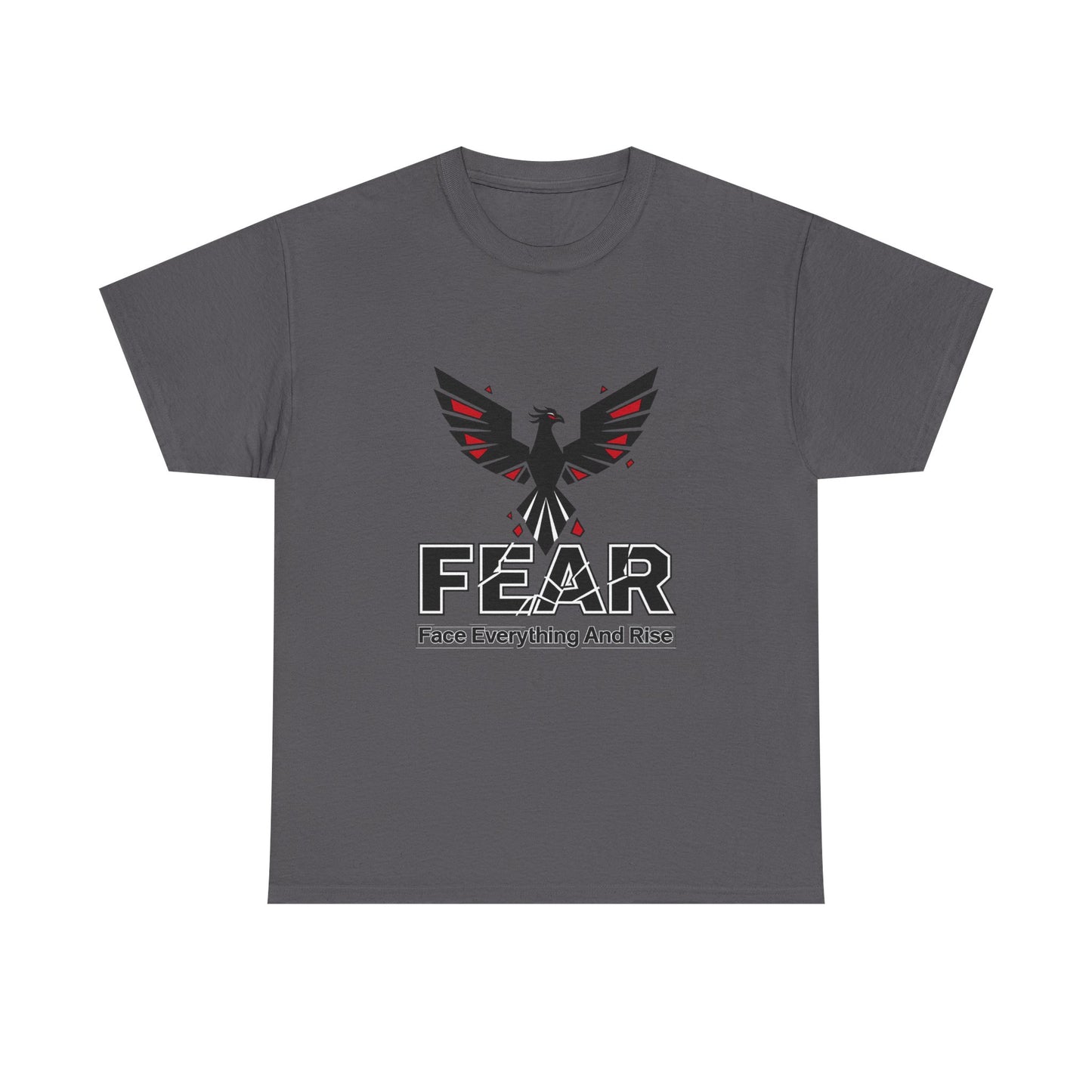
The FEAR (Face Everything and Rise) Cotton T-Shirt carries a more forceful version of the same principle. Its phoenix-inspired artwork reframes fear as an instruction to face what is in front of you and rise through responsible action. Courage in recovery is not pretending to be unafraid. It is telling the truth, asking for help, listening, serving, owning your part, and continuing after a difficult day.
Humility is strength without the spotlight. It does not need constant recognition because its purpose is not to impress anyone. Its purpose is to keep recovery open, connected, accountable, and useful.
You do not have to prove your worth. You do not have to know everything. You do not have to carry every problem alone. Stay teachable. Be useful. Own your part. Celebrate progress with gratitude. Stay rooted in the practices and people that support continued growth.
The person who remains willing to learn can keep changing. The person who keeps changing can keep giving hope away.
For more motivational apparel centered on personal growth, recovery awareness, and daily encouragement, visit the MAP to Victori collection.