

Resentment & Realistic Resolutions: How to Welcome the New Year Lighter (Week 14)
There's something about New Year's Eve that hits different when you're in recovery. Maybe it's the way everyone talks about "fresh starts" and "new beginnings", concepts that feel both deeply familiar and slightly foreign when you've been working on yourself one day at a time. Or maybe it's how the calendar forces us to look back at a full year of growth, struggle, setbacks, and victories all at once.
If you're like me, this time of year can stir up a complex mix of emotions. There's hope for what's possible in the year ahead, but also the weight of everything that happened, or didn't happen, in the year behind us. And if we're not careful, that reflection can quickly turn into resentment.
Resentment toward ourselves for not being further along. Resentment toward others who seem to have it easier. Resentment toward circumstances that felt unfair or opportunities that never came. This is where the rubber meets the road in recovery, because resentment, as the Big Book tells us on pages 64-66, is the number one offender. It destroys more people in recovery than anything else.
But here's what I've learned: New Year's doesn't have to be about perfect resolutions or dramatic transformations. It can be about something much more powerful, entering the new year lighter, with less resentment and more realistic hope.
What Happens When Resentment Writes Our Resolutions
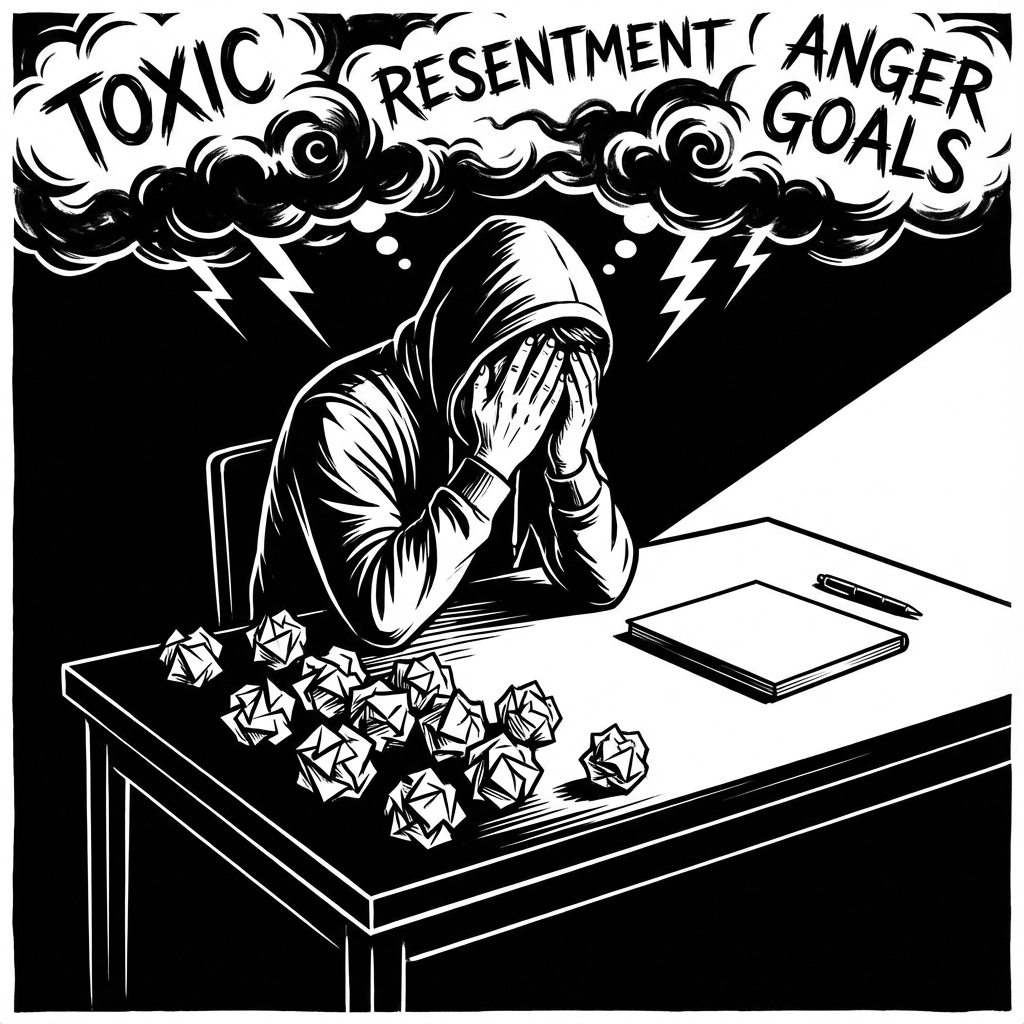
When I'm full of resentment, my New Year's resolutions get twisted. Instead of genuine self-care goals, they become revenge fantasies dressed up as personal growth. "I'll show them how successful I can be." "I'll prove I'm not the mess they think I am." "I'll finally be perfect enough to deserve love."
The Big Book describes resentment as a poison that affects every area of our lives, our relationships, our peace of mind, our spiritual connection, and yes, even our ability to set healthy goals for ourselves. When we're angry at the world, angry at ourselves, or angry at our circumstances, that anger doesn't just disappear when January 1st rolls around. It seeps into our resolutions like ink in water.
I've watched this happen to myself and others countless times. We set impossible standards, lose 50 pounds in three months, completely overhaul our entire personality, never feel negative emotions again, not because these goals serve our wellbeing, but because we're trying to outrun the pain of resentment.
Or we go the other direction entirely. Resentment tells us we're hopeless, that change is impossible, that we've proven time and again that we can't follow through on anything. So we either make no resolutions at all, or we make half-hearted ones we're already planning to abandon.
Both extremes, the impossible standards and the hopeless surrender, come from the same poisoned well. When resentment is driving the bus, our resolutions become either weapons against ourselves or white flags of defeat.
The Resentment Inventory: Looking Back to Move Forward
Here's what recovery has taught me about handling this season: before we write our resolutions, we need to do some honest inventory work around our resentments from the past year. Not to shame ourselves or get lost in the pain, but to see clearly what we're carrying so we can choose what to put down.
The Big Book's approach to resentment inventory is both simple and profound. We write down the person or situation that triggers our anger, what specifically happened, and how it affects us. This isn't about judging whether our anger is justified, it's about getting honest about what's taking up space in our hearts and minds.
As this year comes to a close, take some time to gently list where resentment showed up for you. Maybe it was:
- Frustration with family members who still don't understand your recovery
- Anger toward yourself for relapses or mistakes you made
- Resentment toward friends who seemed to move on while you were getting sober
- Bitterness about opportunities you felt you missed because of your addiction
- Irritation with people in recovery who seemed to have it easier than you
The goal isn't to analyze or fix these resentments right now. It's simply to acknowledge them with honesty and compassion. Because here's the thing, unexamined resentments will absolutely sabotage your New Year's resolutions, but examined resentments can actually inform realistic, healing-focused goals.
From Resentment-Based Goals to Recovery-Based Resolutions
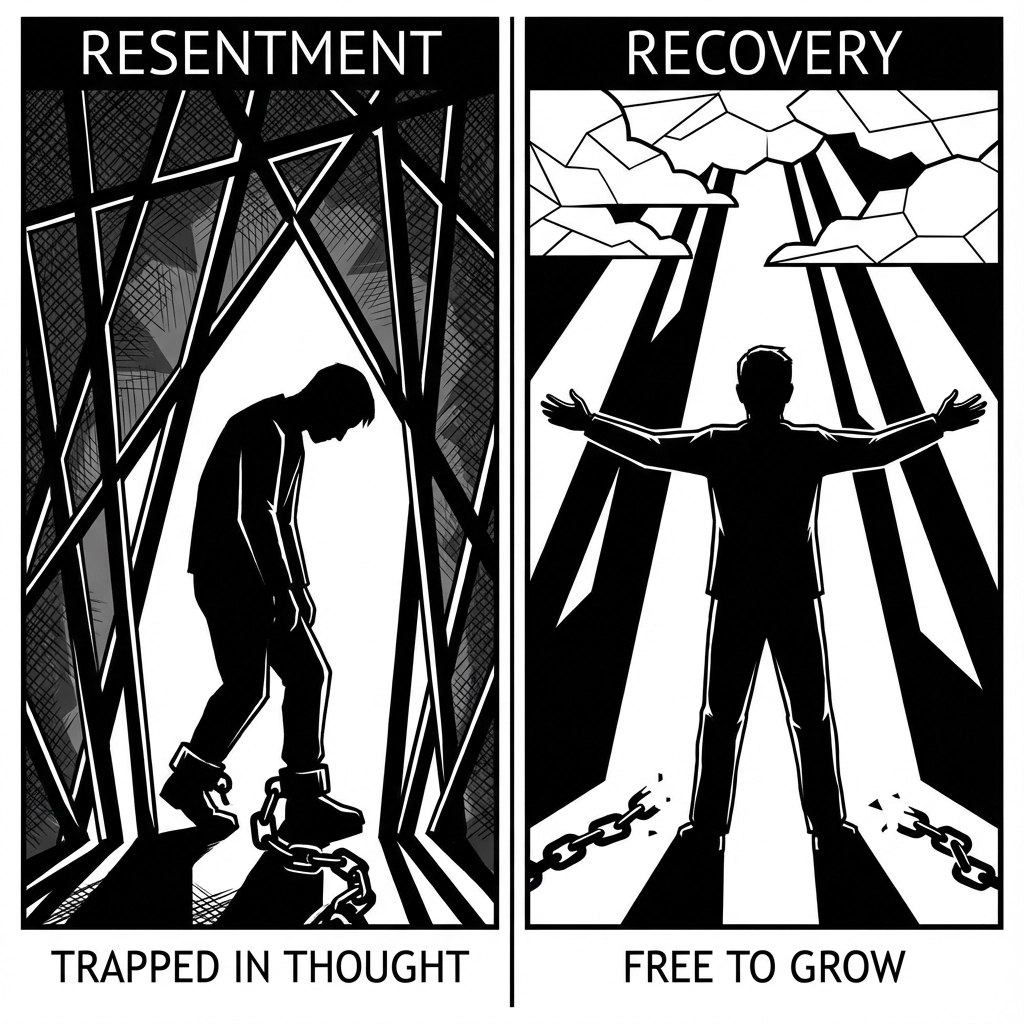
Once we've done that honest inventory, we can start to notice the difference between resentment-based goals and recovery-based resolutions. The difference is profound:
Resentment-based goals are about proving, avoiding, or controlling. They're often all-or-nothing, punishment-focused, and rooted in shame. They sound like:
- "I'll never mess up again"
- "I'll be perfect this year so no one can criticize me"
- "I'll achieve everything I should have accomplished if I hadn't been an addict"
Recovery-based resolutions are about growing, healing, and aligning with your values. They're realistic, self-compassionate, and rooted in love. They sound like:
- "I'll practice setting boundaries when I feel overwhelmed"
- "I'll reach out for support before I reach my breaking point"
- "I'll honor my recovery by taking care of my physical and emotional health"
The shift from resentment-based to recovery-based resolutions isn't just about changing the words, it's about changing the entire foundation. Instead of resolutions that punish you for your past or demand perfection from your future, you're choosing goals that actually support your healing and growth.
Here's a practical way to make this shift: take one resolution you were considering and ask yourself these questions:
- Am I trying to prove something to someone I resent?
- Is this goal about punishment or punishment?
- Does this resolution align with my recovery values or my resentment?
- Is this realistic for where I am today, or am I setting myself up to fail?
Small Actions, Big Freedom
The most sustainable resolutions in recovery aren't grand gestures, they're small, consistent practices that move us toward freedom. The Big Book talks about how spiritual growth happens through daily practices, not dramatic transformations. The same is true for our New Year's resolutions.
Instead of "I'll never get resentful again," try "I'll pause and pray before reacting when I feel triggered." Instead of "I'll forgive everyone who hurt me," try "I'll write about my resentments once a week and ask my Higher Power for willingness to let go."
These smaller practices have several advantages. First, they're actually doable. Second, they build on themselves over time. Third, they focus on your response rather than trying to control outcomes. And fourth, they create space for grace when you're not perfect.
Some realistic, recovery-focused resolutions you might consider:
- Practice saying "no" without over-explaining when you need boundaries
- Share honestly with one trusted person when resentment starts building
- Write a brief gratitude list when you catch yourself in resentment spirals
- Attend one extra meeting per month when you're feeling isolated
- Take five minutes before bed to reflect on the day without judgment
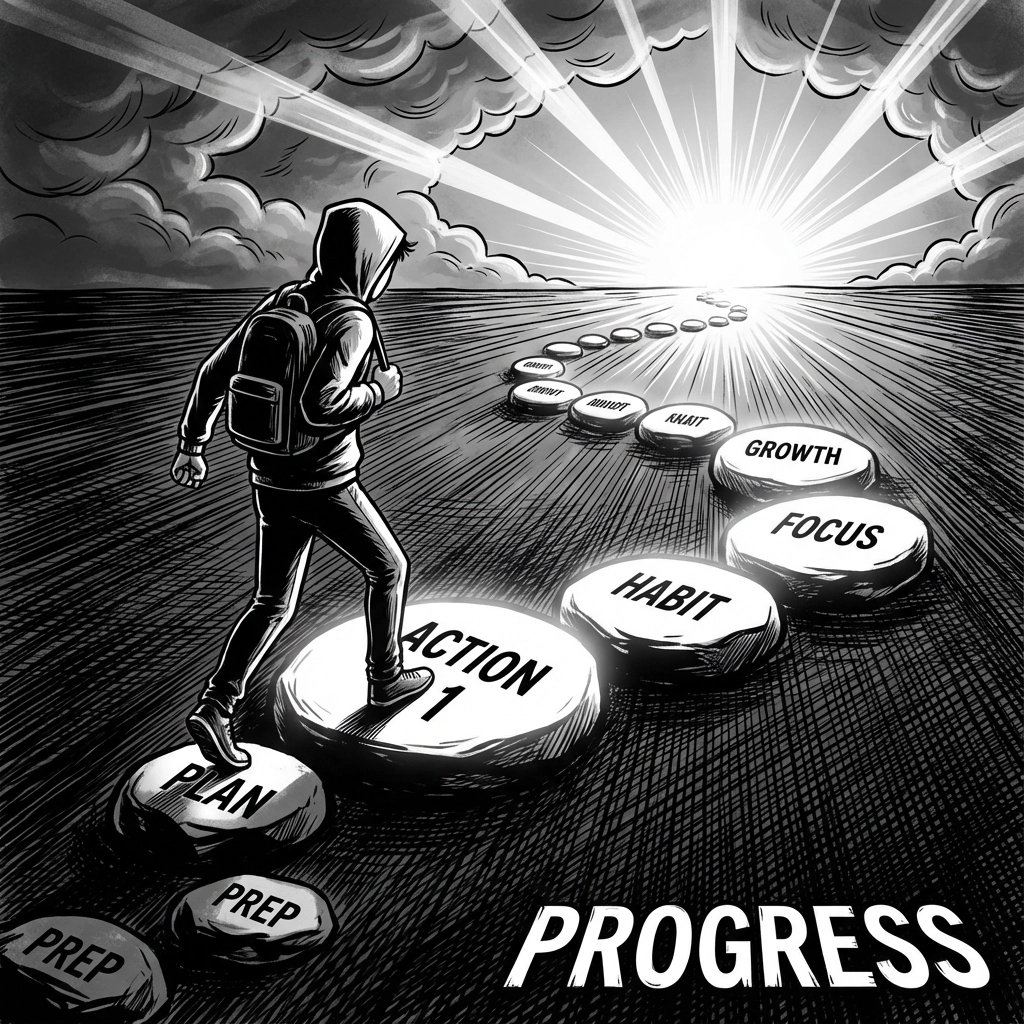
The goal isn't to eliminate all negative emotions or become perfectly zen. The goal is to develop tools that help you respond to life's inevitable challenges from a place of strength rather than reaction.
Entering the New Year Lighter
As we step into this new year, I want you to remember something important: you don't have to enter it perfectly healed. You don't have to have all your resentments resolved or all your goals figured out. You're allowed to enter this year in process, imperfect, and still deeply worthy of love and belonging.
Recovery isn't about flipping a switch from broken to fixed. It's about slowly turning our hearts back toward truth, willingness, and love. It's about choosing progress over perfection, connection over isolation, and hope over despair: one small decision at a time.
The resentment work we do isn't about becoming perfect people who never get angry. It's about becoming free people who don't have to carry the weight of past hurts into every new opportunity. When we release resentments, we don't just change our past: we change our future.
This week, as you reflect on the year behind and the year ahead, be gentle with yourself. Look back with honesty but not brutality. Set goals with hope but not pressure. And remember that every day you choose recovery: even imperfectly: you're already living a resolution that matters more than any list you could write.
Your Recovery Resolution Challenge
As we close this week and enter the new year, I invite you to try this simple practice: Write down one resentment you're willing to begin releasing this year. Not perfectly, not completely, but just beginning. Then write one small, realistic action you can take this week that supports your freedom from that resentment.
Maybe it's setting a boundary with someone who drains your energy. Maybe it's writing in your journal instead of rehearsing arguments in your head. Maybe it's simply asking your Higher Power for willingness to forgive: not because the person deserves it, but because you deserve to be free.
Remember, you're not walking this path alone. Whether you're wearing one of our Face Everything And Rise hoodies as a daily reminder of your courage, or simply carrying these words in your heart, you're part of a community that believes in progress, not perfection.
Let's enter this new year lighter: together. One day, one choice, one breath at a time. The best is yet to come.