

How to Choose Recovery Clothing for Athletes
Last Updated: November 17, 2026
Quick Summary
Choose recovery clothing by matching the garment to the body area that took the load, the wear window you have, and the fit you can tolerate. Pick firm but not painful graduated compression for post-training wear, and prioritize breathability, flat seams, and a non-digging waistband for overnight use. Recovery clothing supports recovery but never replaces sleep, nutrition, hydration, and active recovery.
- Compression should be graduated, highest at the ankle or wrist and easing up the limb.
- Follow the manufacturer's size chart and your measurements, not the package label.
- Choose the larger size if between sizes, since too-tight garments go unwearable fast.
- Keep compression wear to 1-3 hours unless a clinician advises otherwise.
- Wash in cold water, skip the dryer and fabric softener, and air-dry flat.
Table of Contents
- What Recovery Clothing Actually Does for Athletes
- Compression Wear for Recovery: How Tight Is Too Tight?
- The Best Recovery Clothing for Athletes by Sport and Need
- Best Recovery Sleepwear and Overnight Recovery
- Women's Recovery Clothing for Athletes: Fit and Fabric Differences
- Recovery Clothing vs Other Recovery Methods: What the Evidence Says
- Care, Durability, and Cost Per Wear
- Building Your Post-Workout Clothing Routine
- Frequently Asked Questions
What Recovery Clothing Actually Does for Athletes
Recovery clothing for athletes is apparel built to support the body between training sessions, using compression, fabric technology, and fit to encourage circulation and comfort during rest. It can be thought of as the clothing equivalent of a cool-down: a simple tool that helps your body settle after hard work.
The category has grown fast, and the marketing around it has grown faster. Compression garments, mineral-infused fabrics, infrared-treated leggings, and recovery sleepwear all promise to reduce soreness and speed recovery time. Some of those claims hold up better than others. Below, we'll separate what the fabric can realistically do from what the label wants you to believe, then walk through how to pick pieces by sport, body, and budget.
Here's the short version: recovery clothing supports recovery, it does not replace it. Sleep, nutrition, hydration, and active recovery do the heavy lifting. Apparel is the layer on top.
Compression Wear for Recovery: How Tight Is Too Tight?
Compression wear for recovery works best when it is firm but not painful, and graduated, meaning pressure is highest at the ankle or wrist and eases as it moves up the limb. If a garment leaves deep marks, tingles, or numbness, it is too tight.
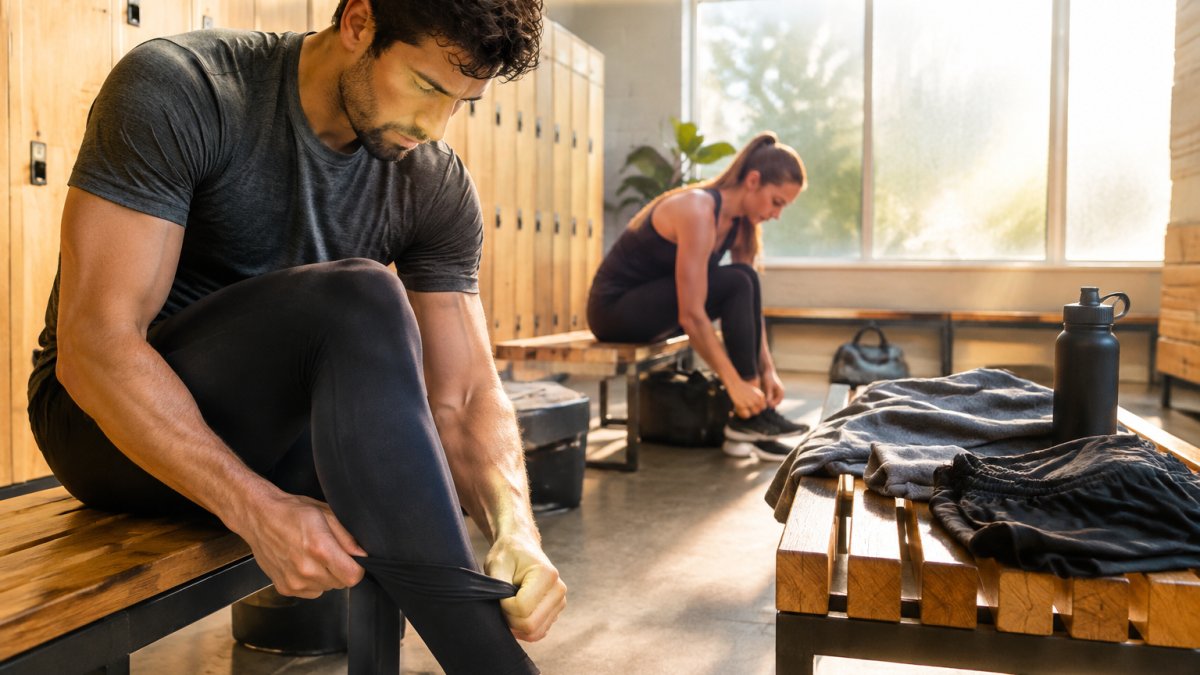
The biggest mistake we see is buying compression by feel alone. A garment that feels "supportive" in the store can be far too tight for an hour of wear, and one that feels loose does nothing at all. Fit should follow the manufacturer's size chart and your measurements, not the label on the package.
Understanding mmHg and Compression Levels
mmHg stands for millimeters of mercury, the unit used to measure compression pressure. Athletic recovery garments typically sit in a mild range, well below medical-grade compression, which is prescribed and fitted by a clinician.
- Mild compression: everyday recovery wear, easy to put on, comfortable for long periods
- Moderate compression: firmer support for post-run or post-lift wear, usually 1-3 hours
- Medical-grade: prescribed for circulation conditions, fitted by a professional, not a substitute for care
Watch out: if you have a circulation condition, varicose veins, or diabetes, talk to your doctor before wearing compression garments for long stretches. MedlinePlus overview of compression stockings explains how medical compression differs from athletic wear.
The Best Recovery Clothing for Athletes by Sport and Need
The best recovery clothing for athletes depends on the sport, the body part that took the load, and how long you will wear it. But the more useful question is not which garment is "best" in general. It is which garment fits the specific recovery need you have tonight.
A practical way to sort the category is by the body area that took the load, the wear window you have, and the fit you can tolerate. The table below is a starting point, not a prescription.
| Recovery need | Garment type | Typical wear window | Fit check | Best for |
|---|---|---|---|---|
| Calf and shin soreness | Compression socks or sleeves | 1-3 hours after a run | Toe box flat, no bunching at the ankle, easy to slide on | Runners, walkers, hikers |
| Full-leg heaviness | Compression leggings or tights | 1-2 hours | Waistband stays put without rolling, no pinch behind the knee | Lifters, endurance athletes |
| Overnight support | Recovery sleepwear or light compression socks | Overnight | No tight cuffs, flat seams, breathable fabric | Anyone training hard |
| Travel and rest days | Loose recovery tees and bottoms | All day | Full range of motion, no riding up | Frequent travelers, desk workers |
| Joint support | Compression sleeves | During activity | Snug but not restrictive, stays in place through the range of motion | Lifters, court sports |
| Post-surgical or clinical swelling | Medical-grade compression | As directed by a clinician | Fitted by a professional | Not a self-selected athletic purchase |
How to choose by activity
For runners, the calf and shin are the usual target. Calf sleeves and compression socks are easy to put on after a run and easy to remove if they feel wrong. A common pattern is to wear them for the drive home and the first hour after training, then switch to loose clothing. If you have had shin splints or calf tightness, a sleeve that covers the calf without compressing the foot is often more comfortable than a full sock.
Loose recovery tees are a reasonable choice if the goal is comfort and warmth.
For swimmers and cyclists, light, breathable pieces for travel and rest days are usually enough. Cyclists often spend hours in a seated position after a ride, and a tight waistband or heavy fabric can become uncomfortable. Look for flat seams and a cut that does not bunch at the hip.
How to choose by body area and fit
Fit should follow the manufacturer's size chart and your own measurements, not the label on the package. Measure the circumference of the calf, thigh, or arm at the point the garment will cover, and compare that to the chart. If you are between sizes, choose the larger size for recovery wear, because a garment that is too tight is more likely to be unwearable for an hour than one that is slightly loose.
Watch out: a garment that feels supportive in the store can be far too tight for an hour of wear, and one that feels loose does nothing at all. Try it on for ten minutes before you commit, and check for deep marks, tingling, or numbness.
How to choose by intended use and wear time
Recovery clothing is not one category. A garment for a one-hour post-run window is different from a garment for eight hours of sleep. For short wear windows, mild to moderate compression is usually enough. For overnight wear, prioritize breathability, flat seams, and a waistband that does not dig in. Full compression tights are usually too much for eight hours of sleep, but light compression socks are a reasonable overnight choice for some athletes.
For travel and rest days, loose recovery tees and bottoms are more useful than compression. The goal is comfort and freedom of movement, not pressure. If you are choosing one piece to start with, pick the one you will actually wear for the body area that bothers you most.
For a broader roundup of picks, see our guide to the best recovery clothing to chase your goals in 2026.
Best Recovery Sleepwear and Overnight Recovery
Our rule of thumb: if you forget you're wearing it by hour two, it's the right sleepwear.
Women's Recovery Clothing for Athletes: Fit and Fabric Differences
Women's recovery clothing for athletes differs mainly in cut and proportion, not in function. Waistbands sit higher, leg lengths run shorter, and shoulder and chest shaping is adjusted so compression sits where it should instead of riding up.
Fabric matters just as much. Look for four-way stretch, moisture-wicking blends, and seams that sit away from high-friction areas. Cotton is comfortable for rest-day wear but holds moisture, so it's a poor choice for sweaty post-workout hours.
Before you buy, check the sizing chart against your own measurements. Our recovery T-shirt sizing and fit guide for men and women walks through how the numbers translate to actual fit.
Recovery Clothing vs Other Recovery Methods: What the Evidence Says
Recovery clothing is one tool among several, and the evidence behind it is mixed. The most useful way to read the research is to sort claims into three buckets: benefits that are reasonably established, benefits that are uncertain, and benefits that are product-specific and hard to verify.
What is reasonably established
The research is less consistent on whether compression actually speeds muscle repair or improves performance on the next day.
Sleep and nutrition have stronger evidence than any garment. Sleep is when the body does most of its repair, and protein intake, hydration, and easy movement on rest days do more for recovery time than any single piece of clothing. Recovery clothing works best when it supports those habits rather than replaces them.
What is uncertain
Claims about reduced inflammation are also uncertain. Some studies suggest compression may affect swelling, but the effect is modest and varies by garment, fit, and wear time. A garment that is too tight can reduce comfort and may not help at all.
What is product-specific
Fit, fabric, and construction vary widely, so a claim that is true for one garment may not be true for another. Graduated compression, flat seams, and four-way stretch are concrete features you can check. A vague "recovery technology" label is not. When a product page makes a claim, look for the specific feature that supports it.
How apparel fits alongside other recovery methods
Recovery clothing is a layer on top of the basics, not a standalone solution. A practical order of operations is: sleep, nutrition, hydration, and easy movement first; then apparel as a comfort and support layer for the body area that took the load. If you are choosing between a new garment and an extra hour of sleep, the sleep is the better investment.
Watch out: if you have a circulation condition, varicose veins, or diabetes, talk to your doctor before wearing compression garments for long stretches. Medical-grade compression is prescribed and fitted by a clinician, and athletic wear is not a substitute for care.
If you want a critical look at what to expect, our recovery apparel review: what to look for in 2026 breaks down the claims worth trusting.
Care, Durability, and Cost Per Wear
Recovery clothing earns its price through repeat wear, so care matters. Wash compression pieces in cold water, skip the dryer, and avoid fabric softener, which coats fibers and reduces stretch recovery. Most pieces last longest when air-dried flat.
Cost per wear is the honest measure. A $19.99 recovery tee worn three times a week for a year costs pennies per wear; a cheaper shirt that loses shape in a month does not. Printed versus embroidered construction also affects longevity, and our comparison of embroidered vs. printed recovery apparel covers which lasts longer.
Building Your Post-Workout Clothing Routine
A post-workout clothing routine is simple: change out of sweaty training gear, put on a clean recovery layer, and wear it for one to three hours while you eat, hydrate, and rest. That's it. No ritual required.
- Change within 20 minutes of finishing
- Choose compression for the body part that took the load
- Keep wear time to 1-3 hours unless a clinician advises otherwise
- Swap to loose, breathable pieces for the rest of the day
- Wash after every wear to protect stretch and skin
If you're building the habit, start with one piece you'll actually wear. Our Recovery cotton T-shirt is a medium-weight 100% ethically grown US cotton option.
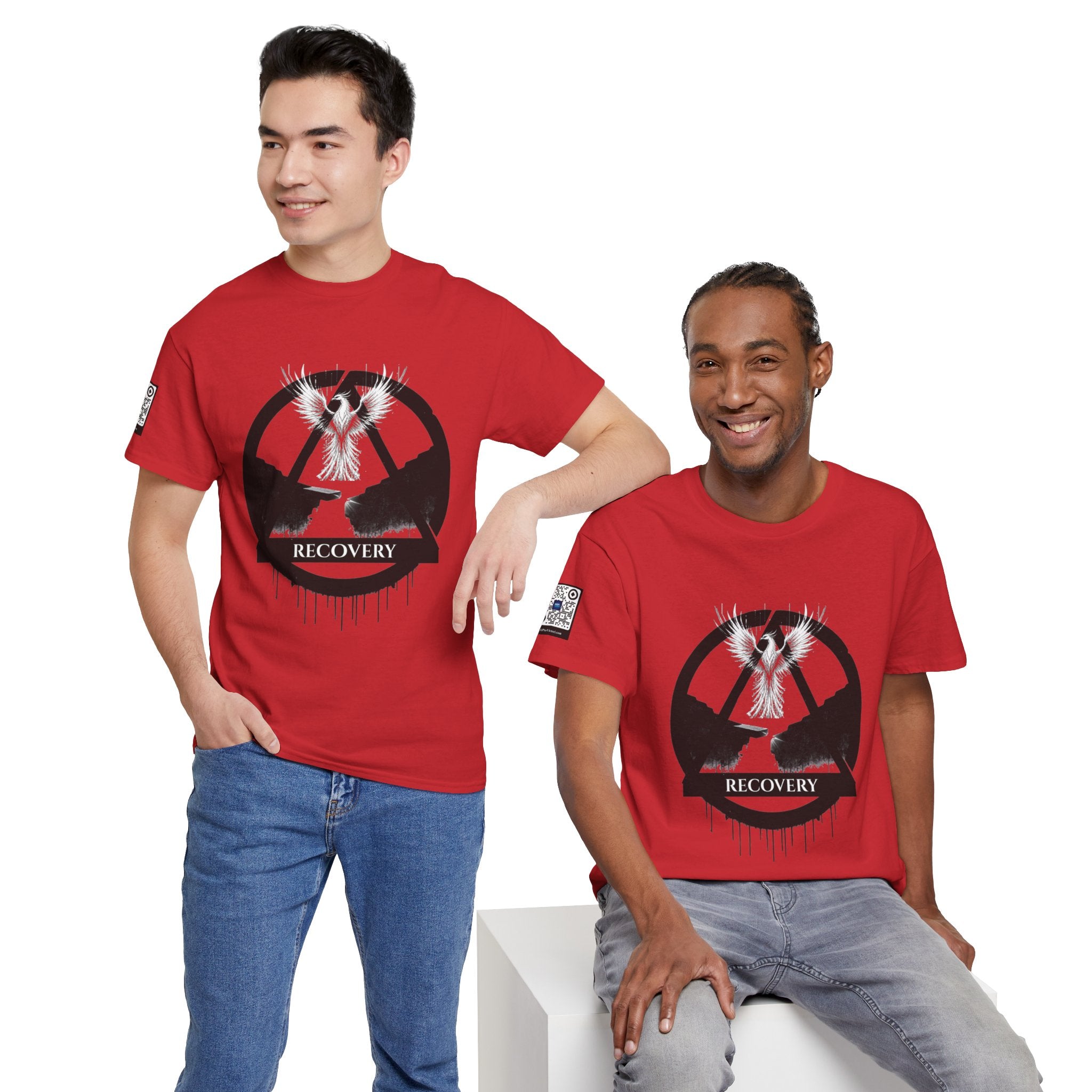
Recovery is a daily practice, not a single purchase, and the right clothing makes that practice easier to keep. MAP to Victori designs motivational apparel for people chasing goals, with soft, durable fabrics, OEKO-TEX certified cotton, and new designs released monthly to keep your routine fresh. Start with one piece you'll wear often, and let it remind you to keep going.
Frequently Asked Questions
Does compression clothing help with post-workout recovery?
Compression does not replace sleep, nutrition, or hydration. Treat recovery apparel as one layer of a recovery routine, not a fix on its own.
What should athletes look for in recovery clothing?
Look at the product listing for the fabric, fit, and care details. Check each garment's care label before buying, and consider cost per wear over sticker price.
How should recovery clothing fit?
Check the product's size chart against your own measurements before buying.
Can recovery clothing be worn during active recovery?
Yes. Recovery tees and bottoms are suitable for walks and easy days; check each product's listing for its intended use.
