

Carry the Message: How Recovery Becomes a Living Hope
Step Twelve is often treated as a final assignment: complete the previous steps, share the message, and move on. A closer look shows something different. Step Twelve is not a speech, a performance, or a task that can be checked off a list. It is a way of living.
In Alcoholics Anonymous, Step Twelve calls on members to carry the message to people who are still suffering and to practice recovery principles in all areas of life. The official description of the Twelve Steps makes both parts clear: recovery moves outward through service and inward through daily choices.
The message is not limited to what a person says in a meeting. It is carried through honesty, presence, fellowship, service, and consistency. A person in recovery becomes evidence that change is possible. Their life becomes a practical form of hope.
Many people entering recovery believe their past disqualifies them from helping anyone else. Shame tells them their story is baggage. Fear tells them they are not far enough along. Perfectionism tells them they need a polished testimony before they can speak. Recovery challenges all three ideas. Your story does not need to be perfect to be useful. It does not need to include the right phrases, dramatic details, or years of experience. It needs to be honest. Someone who is still suffering may not need a lecture. They may need to hear that another person understands the fear, isolation, denial, or uncertainty they are experiencing. That does not mean every detail must be shared with everyone. Healthy boundaries still matter. Carrying the message is not the same as exposing every private part of your life. It means speaking from lived experience with honesty, responsibility, and respect for the other person’s readiness. Your story can become a bridge because it connects two places: where you were and where someone else is now. It shows that the distance between those places can be crossed.
The FEAR (Face Everything and Rise) Cotton T-Shirt reflects this part of recovery. Its phoenix-inspired design and direct message represent the decision to face what is difficult rather than hide from it. Carrying the message begins with that same decision: face the truth, stay present, and let recovery be visible through your choices.

Recovery contains a practical paradox: sharing what has helped you does not reduce it. It reinforces it. When you explain how you stayed connected, asked for help, returned to a meeting, or made it through a difficult period, you are reminded of the principles that support your own recovery. Speaking honestly about the past can strengthen your commitment to the present. Offering hope to someone else can reconnect you with the reasons you chose a different life. This is not about becoming a hero or presenting yourself as an expert. It is not about having an answer for every problem. Often, the most useful message is simple: I have been where you are, and there is a way forward. That statement does not promise an easy path. It does not remove personal responsibility. It communicates possibility. It tells another person that isolation is not the only option. Giving away experience also requires humility. The goal is not to control someone else’s recovery or force them to follow your exact path. Share what worked for you. Listen to what they are saying. Encourage them to seek appropriate support. Let them make their own decisions with the help of qualified professionals, trusted peers, and recovery resources.
Every person in recovery was once new. There was a first meeting, a first phone call, a first conversation with someone who understood. For many people, belonging begins with ordinary actions: someone introduces themselves, someone offers a phone number, someone stays after the meeting, someone asks a sincere question, and someone listens without rushing to correct or advise. These actions may appear small, but they can determine whether a newcomer returns. A person who feels invisible may assume that recovery has no place for them. A person who feels noticed may find enough safety to take the next step. Fellowship is not simply being in the same room. It is the ongoing practice of reminding one another that no one has to carry recovery alone. This is why connection matters in the early stages and throughout long-term recovery. People need spaces where they can be honest, receive support, and contribute to something larger than themselves.
The Find Your People Cotton T-Shirt carries a direct reminder about community and belonging. The Find Your People Hoodie offers the same message in a comfortable layer suited to meetings, community events, volunteer work, or everyday routines.

Finding your people is important, and becoming one of the people who helps others feel found is part of carrying the message. Words matter, but actions often communicate more clearly. Setting up chairs, making coffee, greeting someone at the door, answering a call, providing transportation, or sitting with someone who is frightened are all forms of service. None require a podium. Some may never receive recognition. Their value is not determined by how visible they are. Service demonstrates what recovery produces: people who show up, accept responsibility, and remain available when circumstances are difficult. It turns the principles of recovery into observable behavior. This matters because people who are still suffering may distrust promises. They may have heard assurances before. Consistent action gives them something concrete to evaluate. A person who keeps showing up communicates reliability. A person who listens communicates respect. A person who helps without demanding praise communicates that recovery can change how people relate to one another. Service should not become a way to avoid personal responsibilities or ignore personal limits. Carrying the message includes knowing when to involve professionals, emergency services, sponsors, counselors, or other qualified support. Being useful does not mean being available for every crisis or trying to solve problems beyond your role. It means doing the next appropriate thing with willingness.
Fear often presents itself as caution. It says you should wait until your story is cleaner, your recovery is stronger, or your delivery is more polished. Sometimes that caution protects healthy boundaries. Other times, it is simply avoidance. The person who needs to hear your story does not need a perfect performance. They need something real enough to recognize. Honesty is more valuable than polish because honesty creates connection. It allows another person to say, “I understand that,” or “I have felt that way.” It replaces the distance between an impressive speaker and a struggling listener with a shared human experience. This does not mean speaking carelessly. Consider the setting. Respect confidentiality. Avoid glorifying past substance use or presenting recovery as a single formula that works identically for everyone. Focus on what helped you move forward. Speak without judgment. Leave room for the other person to make their own choices. Fear does not have to disappear before you share. Courage is often the decision to speak responsibly while fear is still present.
Some of the strongest messages are not dramatic. They are consistent. A person who attends regularly, keeps commitments, remembers names, checks in, tells the truth, and returns after a difficult day may never speak from a stage. Their life can still carry hope. Step Twelve is not completed when a person shares once or performs a formal service role. It continues through ordinary decisions: choosing honesty over concealment, choosing connection over isolation, choosing accountability over excuses, choosing service over self-absorption, choosing recovery again after a difficult moment, and practicing principles at home, at work, and in relationships.
The Just The Beginning Cotton T-Shirt reflects this ongoing perspective. Its simple seedling design represents the reality that progress often begins quietly. A new life is built through repeated actions, not one dramatic event.

Every day a person chooses recovery, they add another part to a life that may help someone else believe change is possible. You may never know the full impact of your recovery. You may not know which honest share encouraged someone to return. You may not know whether a greeting helped a newcomer stay. You may not know whether a phone call interrupted a dangerous decision or whether your consistent presence gave someone a reason to keep trying. That uncertainty is part of the work. Service cannot depend entirely on visible results. If you require proof that every action mattered, you may stop before the effects become clear. A ripple travels beyond the point where it begins. Recovery works in a similar way. One person shares experience with another. That person remains connected, develops stability, and eventually offers support to someone else. Hope moves through relationships, meetings, families, workplaces, and communities.
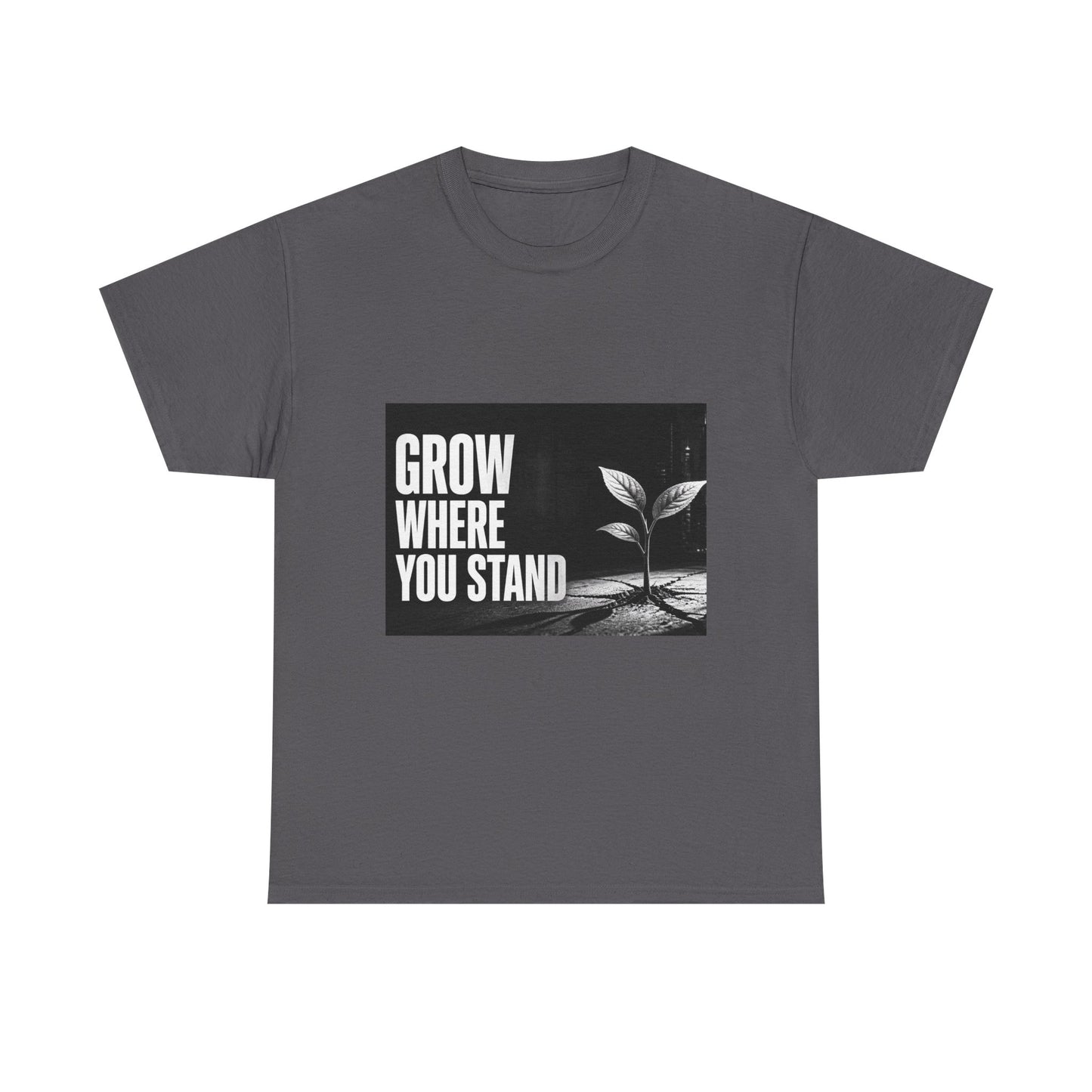
The Grow Where You Stand Cotton T-Shirt is a practical reminder of this process. Growth does not require a perfect setting or a finished life. It begins where you are, through the next honest and constructive action.
The ripple is real even when you cannot measure it. Carrying the message is not reserved for speakers, sponsors, or people with perfect records. It belongs to anyone willing to live recovery openly and responsibly. Your story can help someone feel less alone. Your presence can make a room safer. Your service can demonstrate that recovery changes behavior. Your honesty can reach someone who does not trust polished words. Your consistency can become proof that hope does not have to be loud to be real. Step Twelve is a continuing practice: share what you have learned, remain connected, serve within your limits, and keep applying recovery principles in daily life. The message is already in you. Let your life carry it.
Save this for later, or tag someone who might need the reminder: no one has to recover alone.